Skip to content
  • EN
  • FR
toggle menu
MENUMENU
  • ABOUT US
        • About us

          • THE CIHEAM
            • STRUCTURE
          • CIHEAM MONTPELLIER
            • Governance & Team
            • Gender equality
            • Quality approaches
            • Job vacancies
            • Campus-Accommodation
            • Premises & Facilities
            • Access
        • CIHEAM MontpellierOur vision is that of a Mediterranean basin characterised by a spirit of cooperation.
        • CIHEAM publicationsOur publications and communication tools aim to facilitate decision-making processes for political, economic and agricultural actors in the Mediterranean region

  • MEDIAS
        • Media

          • NEWS AND EVENTS
          • PRESS REVIEW (SCOOP.IT)
          • OUR VIDEOS
        • News and events
        • Press review (Scoop.it)
  • EDUCATION
        • Education

          • MASTER PROGRAMMES
            • Admission to M2 Programmes
            • Professional integration
          • VOCATIONAL TRAINING
          • LANGUAGE CENTER
          • ERASMUS+
          • E-LEARNING
          • CAMPUS & STUDENT LIFE
        • Master programmesThe CIHEAM Montpellier stands for both personalised accompaniment and international openness.
        • Campus & student lifeSince 1962, almost 95% of our foreign students have been granted accommodation on site.
  • RESEARCH & DEVELOPMENT
        • RESEARCH & DEVELOPMENT

          • DOCTORAL PLATFORM
          • RESEARCH
          • DEVELOPMENT
          • SCIENTIFIC TEAM
          • PROJECTS
          • SCIENTIFIC PRODUCTION
        • Doctoral platformShaping the scientists of tomorrow through research training… A natural commitment of the CIHEAM Montpellier
        • ProjectsOur research and cooperation projects are tools for inclusive development, they take into account the populations and rural and coastal territories of the Mediterranean.
  • SCIENTIFIC DOCUMENTATION
        • SCIENTIFIC DOCUMENTATION

          • MEDITERRANEAN ONLINE CATALOGUE
          • SUPPORTING SCIENCE
          • HAL PORTAL OF THE CIHEAM MONTPELLIER
          • CIHEAM PUBLICATIONS
        • Mediterranean online catalogueA unique Documentation Center on the Mediterranean, invested in sharing knowledge.
        • Scientific productionThe scientific production of the CIHEAM Montpellier is the fruit of collaborations by our lecturer-researchers, associated experts, students and research partners.

  • DIALOGUE & PARTNERSHIPS
        • Dialogue & partnerships

          • NETWORKS FACILITATION
          • BECOMING PARTNERS
          • INSTITUTIONAL PARTNERSHIPS
          • MINISTERIAL MEETINGS
          • PREMISES & FACILITIES
        • Becoming partnersCreating partnerships is part of the genetic make-up of the CIHEAM Montpellier... Join one of its projects or study programmes, support its actions.
        • Ministerial meetingsThrough the Ministerial, CIHEAM contributes to the construction of a dialogue between the Mediterranean countries around questions relating to agriculture and the rural world.
  • OUR INSTITUTES
        • Our institutions

          • CIHEAM SG

            CIHEAM SG

          • CIHEAM BARI

            CIHEAM BARI

          • CIHEAM CHANIA

            CIHEAM CHANIA

          • CIHEAM MONTPELLIER

            CIHEAM MONTPELLIER

          • CIHEAM ZARAGOZA

            CIHEAM ZARAGOZA

MENUMENU
  • ABOUT US
        • About us

          • THE CIHEAM
            • STRUCTURE
          • CIHEAM MONTPELLIER
            • Governance & Team
            • Gender equality
            • Quality approaches
            • Job vacancies
            • Campus-Accommodation
            • Premises & Facilities
            • Access
        • CIHEAM MontpellierOur vision is that of a Mediterranean basin characterised by a spirit of cooperation.
        • CIHEAM publicationsOur publications and communication tools aim to facilitate decision-making processes for political, economic and agricultural actors in the Mediterranean region
  • MEDIAS
        • Media

          • NEWS AND EVENTS
          • PRESS REVIEW (SCOOP.IT)
          • OUR VIDEOS
        • News and events
        • Press review (Scoop.it)
  • EDUCATION
        • Education

          • MASTER PROGRAMMES
            • Admission to M2 Programmes
            • Professional integration
          • VOCATIONAL TRAINING
          • LANGUAGE CENTER
          • ERASMUS+
          • E-LEARNING
          • CAMPUS & STUDENT LIFE
        • Master programmesThe CIHEAM Montpellier stands for both personalised accompaniment and international openness.
        • Campus & student lifeSince 1962, almost 95% of our foreign students have been granted accommodation on site.
  • RESEARCH & DEVELOPMENT
        • RESEARCH & DEVELOPMENT

          • DOCTORAL PLATFORM
          • RESEARCH
          • DEVELOPMENT
          • SCIENTIFIC TEAM
          • PROJECTS
          • SCIENTIFIC PRODUCTION
        • Doctoral platformShaping the scientists of tomorrow through research training… A natural commitment of the CIHEAM Montpellier
        • ProjectsOur research and cooperation projects are tools for inclusive development, they take into account the populations and rural and coastal territories of the Mediterranean.
  • SCIENTIFIC DOCUMENTATION
        • SCIENTIFIC DOCUMENTATION

          • MEDITERRANEAN ONLINE CATALOGUE
          • SUPPORTING SCIENCE
          • HAL PORTAL OF THE CIHEAM MONTPELLIER
          • CIHEAM PUBLICATIONS
        • Mediterranean online catalogueA unique Documentation Center on the Mediterranean, invested in sharing knowledge.
        • Scientific productionThe scientific production of the CIHEAM Montpellier is the fruit of collaborations by our lecturer-researchers, associated experts, students and research partners.
  • DIALOGUE & PARTNERSHIPS
        • Dialogue & partnerships

          • NETWORKS FACILITATION
          • BECOMING PARTNERS
          • INSTITUTIONAL PARTNERSHIPS
          • MINISTERIAL MEETINGS
          • PREMISES & FACILITIES
        • Becoming partnersCreating partnerships is part of the genetic make-up of the CIHEAM Montpellier... Join one of its projects or study programmes, support its actions.
        • Ministerial meetingsThrough the Ministerial, CIHEAM contributes to the construction of a dialogue between the Mediterranean countries around questions relating to agriculture and the rural world.
  • OUR INSTITUTES
        • Our institutions

          • CIHEAM SG

            CIHEAM SG

          • CIHEAM BARI

            CIHEAM BARI

          • CIHEAM CHANIA

            CIHEAM CHANIA

          • CIHEAM MONTPELLIER

            CIHEAM MONTPELLIER

          • CIHEAM ZARAGOZA

            CIHEAM ZARAGOZA

PRESS RELEASE: NATAE Policy Conference, in association with the Dionysus project
CIHEAM > AGENDAS > PRESS RELEASE: NATAE Policy Conference, in association with the Dionysus project

NATAE Policy Conference, in association with the Dionysus project “What scientific and political mechanisms for the future of agroecological transition in the Mediterranean region? Transdisciplinarity, assessments and scaling up”

29 and 30 September 2026, CIHEAM-IAM Montpellier

On 29 and 30 September 2026, the Mediterranean Agronomic Institute of Montpellier hosted the regional conference of the Horizon Europe NATAE project, organised in collaboration with CARI and the Dionysus PRIMA project, on agroecology in the Mediterranean, “What scientific and political mechanisms for the future of agroecological transition in the Mediterranean region? Transdisciplinarity, assessments and scaling up”.
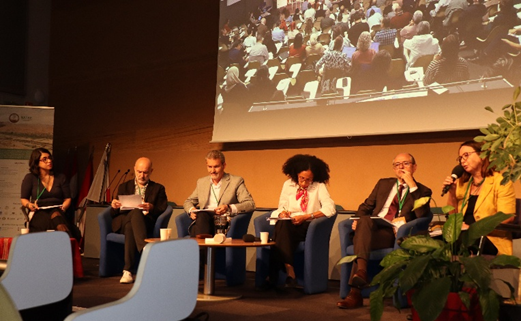
Its main objective was to stimulate a collective dynamic of multi-stakeholder, multi-country and multi-territory exchange in order to develop research and action perspectives to better anchor agroecology in Mediterranean policies and territories; with agroecology framed as a systemic approach, a major strategy for adapting agriculture to the effects of climate change in many territories of the region, but also as an essential vector for food systems that serve public health.

The specific objectives were to explore current policies, scenarios and policy options potentially favourable to agroecology; to assess the multidimensional benefits of agroecological practices on farms and in territories; to explore the transdisciplinary processes of the NATAE project’s living labs and of other ongoing initiatives, and to analyse their impacts on local food security and the local economy; and, finally, to work on ways of scaling up the most relevant initiatives.

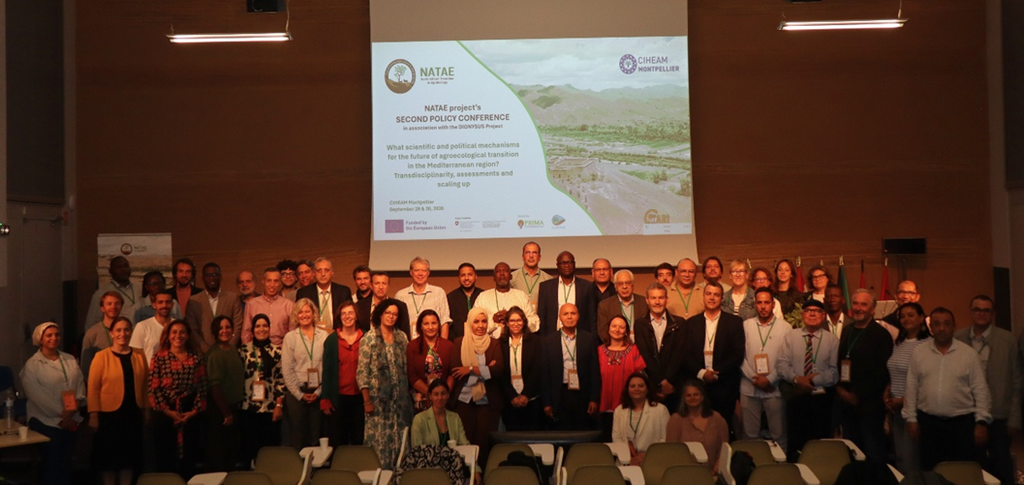
Over 120 stakeholders from across the Mediterranean region took part in the event, representing all five countries of North Africa, from Algeria, Egypt, Mauritania, Morocco and Tunisia, several regions of France, Lebanon and Libya, as well as Italy, Spain, Germany, Portugal, Switzerland, the United States, South Africa, Senegal, and Ivory Coast. They represented a wide diversity of organisations including Mediterranean and European agricultural research and training institutes and centres working across a range of disciplines, national development agencies, associations and civil society organisations, cooperatives and producers, also local and regional authorities from France and Mauritania, and international development and cooperation organisations, along with other regional and international bodies. Participants were selected for their commitment to agroecology and their ability to initiate and contribute to a reflective dialogue, drawing on their respective experiences.

Over two days, the participants were able to explore the different facets of agroecology in North Africa, compare perspectives and share experiences across countries and territories. This exchange enabled them to draw collective lessons and build new connections, helping to raise greater awareness of the value of systemic approach to agroecology for Mediterranean territories in a context of adaptation to climate change.
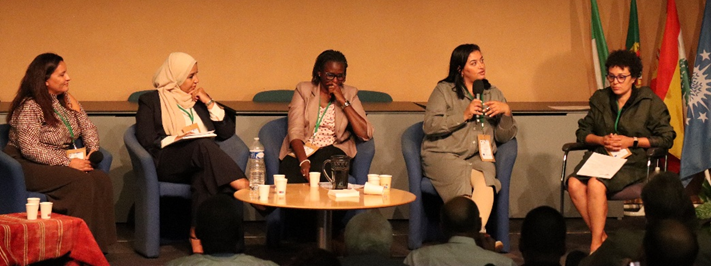
The conference was opened by a French member of parliament and by representatives of the Occitanie region, the Aude department and Montpellier Metropole, who stressed the value of agroecology for the sustainable development and planning of their territories in a context of uncertain climate, and the opportunities it offers for implementing the ecological shift needed for a common future, and as a vector of public health through better nutrition.

Attending policy-makers and researchers recognised the need to better integrate agroecology into national research and higher education programmes in North African countries, an essential step, on the one hand, to capitalise on local knowledge and improve existing agroecology models based on territorial specificities and, on the other, to train a new generation of researchers and practitioners in systemic approaches and the co-construction of knowledge for the future of food and agriculture in the Mediterranean.

The link between agroecology and education was also highlighted by the contribution of a Mauritanian elected official who has implemented a pilot school canteen project based on local sourcing from small-scale agroecological producers, simultaneously improving the health, schooling and education of children in his municipality.
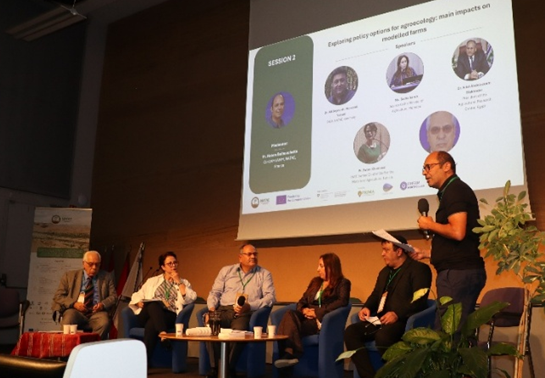
Agroecology ultimately emerged as a major cultural lever for the Mediterranean, through the promotion and enhancement of many local agricultural and food-related forms of knowledge: preparing typical dishes, which helps preserve certain local varieties, and processing and adding value to heritage products.

The need to recognise and strengthen this knowledge brought forward the question of collective and territorial organisation, in connection with market access, as well as that of exchanges between territories and regions through dedicated networks. Several of the civil society organisations present illustrated their expertise and their ability to structure such collectives by recounting their experience.

Finally, the collaboration of researchers was recognised by all participants as indispensable: to provide development partners with evidence of the many benefits of agroecology; to support, assess or help structure ongoing actions in producer networks; and to encourage more targeted support from public policy for small-scale farmers, for example by covering the short-term costs and risks associated with this transition.
Contact: Dr Mélanie REQUIER-DESJARDINS, NATAE Project Scientific Coordinator, CIHEAM-IAM Montpellier

E-mail:  melanie.requier@montpellier.ciheam.org

For more information:
  • https://www.natae-agroecology.eu/
  • https://www.dionysus-nexus.eu/
  • https://www.medae-agroecology.eu/

  • Privacy Policy
  • Legal notice
  • Gender equality plan
  • Site Map
  • Access

Member of

UM


CIHEAM Montpellier

International center for Advanced
Mediterranean Agronomic Studies

3191 route de Mende, CS43999
34093 Montpellier cedex 5
Mail: contact@iamm.fr
Phone: [33] (0)4 67 04 60 00


ERASMUS
ERASMUS

Founding member of

AGROPOLIS
Top
We use cookies on our website to give you the most relevant experience by remembering your preferences and repeat visits. By clicking “Accept All”, you consent to the use of ALL the cookies. However, you may visit "Cookie Settings" to provide a controlled consent.
Cookie SettingsAccept All
Manage consent

Privacy Overview

This website uses cookies to improve your experience while you navigate through the website. Out of these, the cookies that are categorized as necessary are stored on your browser as they are essential for the working of basic functionalities of the website. We also use third-party cookies that help us analyze and understand how you use this website. These cookies will be stored in your browser only with your consent. You also have the option to opt-out of these cookies. But opting out of some of these cookies may affect your browsing experience.
Necessary
Always Enabled
Necessary cookies are absolutely essential for the website to function properly. These cookies ensure basic functionalities and security features of the website, anonymously.
CookieDurationDescription
cookielawinfo-checkbox-analytics11 monthsThis cookie is set by GDPR Cookie Consent plugin. The cookie is used to store the user consent for the cookies in the category "Analytics".
cookielawinfo-checkbox-functional11 monthsThe cookie is set by GDPR cookie consent to record the user consent for the cookies in the category "Functional".
cookielawinfo-checkbox-necessary11 monthsThis cookie is set by GDPR Cookie Consent plugin. The cookies is used to store the user consent for the cookies in the category "Necessary".
cookielawinfo-checkbox-others11 monthsThis cookie is set by GDPR Cookie Consent plugin. The cookie is used to store the user consent for the cookies in the category "Other.
cookielawinfo-checkbox-performance11 monthsThis cookie is set by GDPR Cookie Consent plugin. The cookie is used to store the user consent for the cookies in the category "Performance".
viewed_cookie_policy11 monthsThe cookie is set by the GDPR Cookie Consent plugin and is used to store whether or not user has consented to the use of cookies. It does not store any personal data.
Functional
Functional cookies help to perform certain functionalities like sharing the content of the website on social media platforms, collect feedbacks, and other third-party features.
Performance
Performance cookies are used to understand and analyze the key performance indexes of the website which helps in delivering a better user experience for the visitors.
Analytics
Analytical cookies are used to understand how visitors interact with the website. These cookies help provide information on metrics the number of visitors, bounce rate, traffic source, etc.
Advertisement
Advertisement cookies are used to provide visitors with relevant ads and marketing campaigns. These cookies track visitors across websites and collect information to provide customized ads.
Others
Other uncategorized cookies are those that are being analyzed and have not been classified into a category as yet.
SAVE & ACCEPT